Introduction
Technical indicators are mathematical calculations based on price, volume, or open
interest that help traders identify potential trading opportunities. While there are
hundreds of indicators available, mastering a few key ones can significantly improve
your trading.
1. Moving Averages (MA)
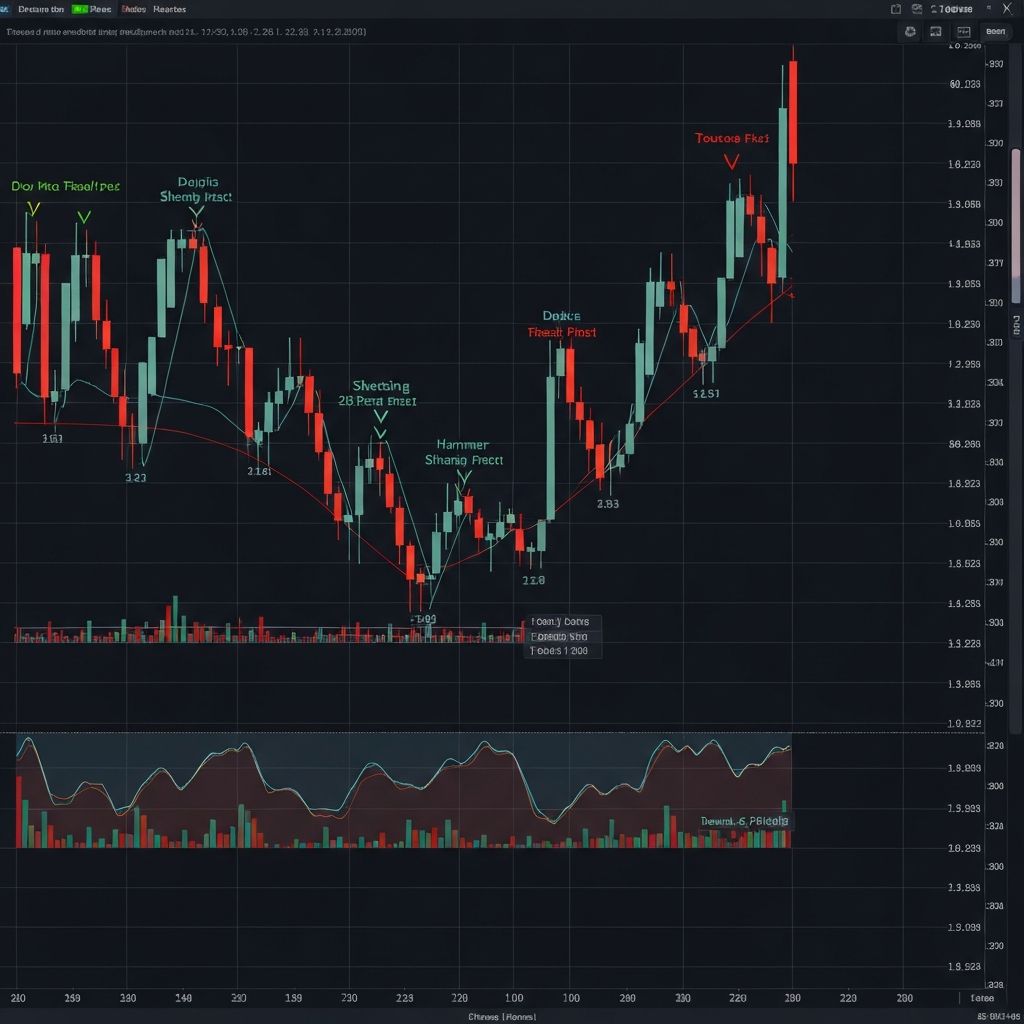
Moving averages smooth out price data to create a single flowing line, making it easier
to identify the direction of the trend.
Types of Moving Averages:
Simple Moving Average (SMA): Calculates the average price over a
specific period
Exponential Moving Average (EMA): Gives more weight to recent prices
How to Use Them:
Use the 50 and 200-period MAs to identify long-term trends
A "Golden Cross" (50 MA crossing above 200 MA) signals bullish momentum
A "Death Cross" (50 MA crossing below 200 MA) signals bearish momentum
2. Relative Strength Index (RSI)
The RSI measures the speed and magnitude of recent price changes to evaluate overbought
or oversold conditions.
Key Levels:
Above 70: Potentially overbought (consider selling)
Below 30: Potentially oversold (consider buying)
50: Neutral zone
Pro Tips:
Look for RSI divergence with price for powerful signals
In strong trends, RSI can remain overbought/oversold for extended periods
3. MACD (Moving Average Convergence Divergence)
MACD shows the relationship between two moving averages and consists of:
MACD Line: 12-period EMA minus 26-period EMA
Signal Line: 9-period EMA of MACD Line
Histogram: Difference between MACD and Signal lines
Trading Signals:
Buy when MACD crosses above the signal line
Sell when MACD crosses below the signal line
Histogram expansion indicates strengthening momentum
4. Bollinger Bands
Bollinger Bands consist of a middle band (SMA) with upper and lower bands based on
standard deviations.
Key Concepts:
Bands expand during high volatility
Bands contract during low volatility (often preceding breakouts)
Price touching upper band doesn't automatically mean "overbought"
Trading Strategies:
Trade bounces off the bands in ranging markets
Use band breakouts to identify new trends
Look for "squeezes" as potential trade setups
5. Fibonacci Retracement
Based on the Fibonacci sequence, these levels help identify potential support and
resistance.
Key Levels:
23.6%
38.2%
50%
61.8% (Golden Ratio)
78.6%
How to Apply:
Identify a significant price move (swing high to swing low or vice versa)
Apply Fibonacci tool
Watch for price reactions at key levels
Combine with other indicators for confirmation
Combining Indicators Effectively
The key to successful technical analysis is using indicators in combination:
Trend + Momentum: Use MAs to identify trend, RSI for entry timing
Multiple Timeframes: Confirm signals across different timeframes
Don't Over-Complicate: 2-3 complementary indicators are sufficient
Conclusion
Mastering these five indicators provides a solid foundation for technical analysis.
Remember, no indicator is perfect ©they work best when combined with proper risk
management and a solid trading plan.
Start practicing with these indicators on a demo account to develop your skills without
risking real capital.